Electromagnetic
Launch
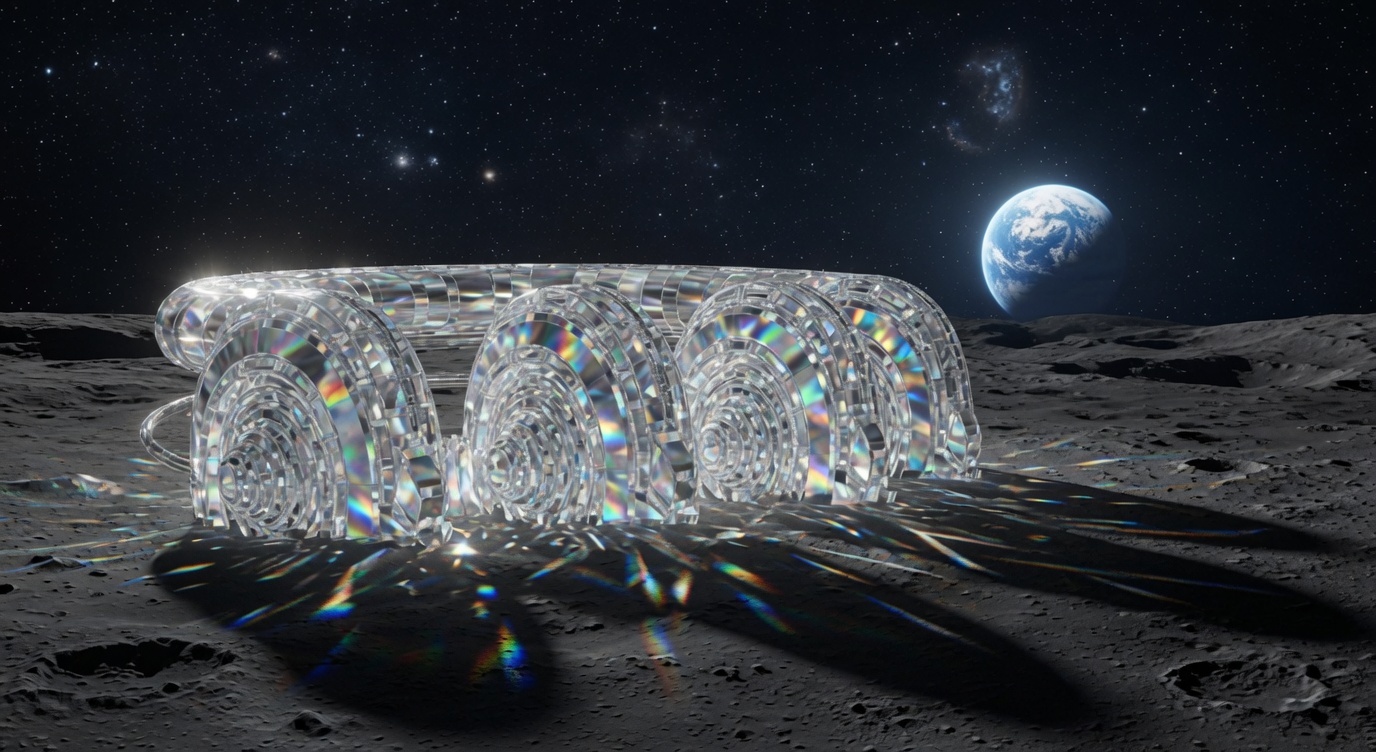
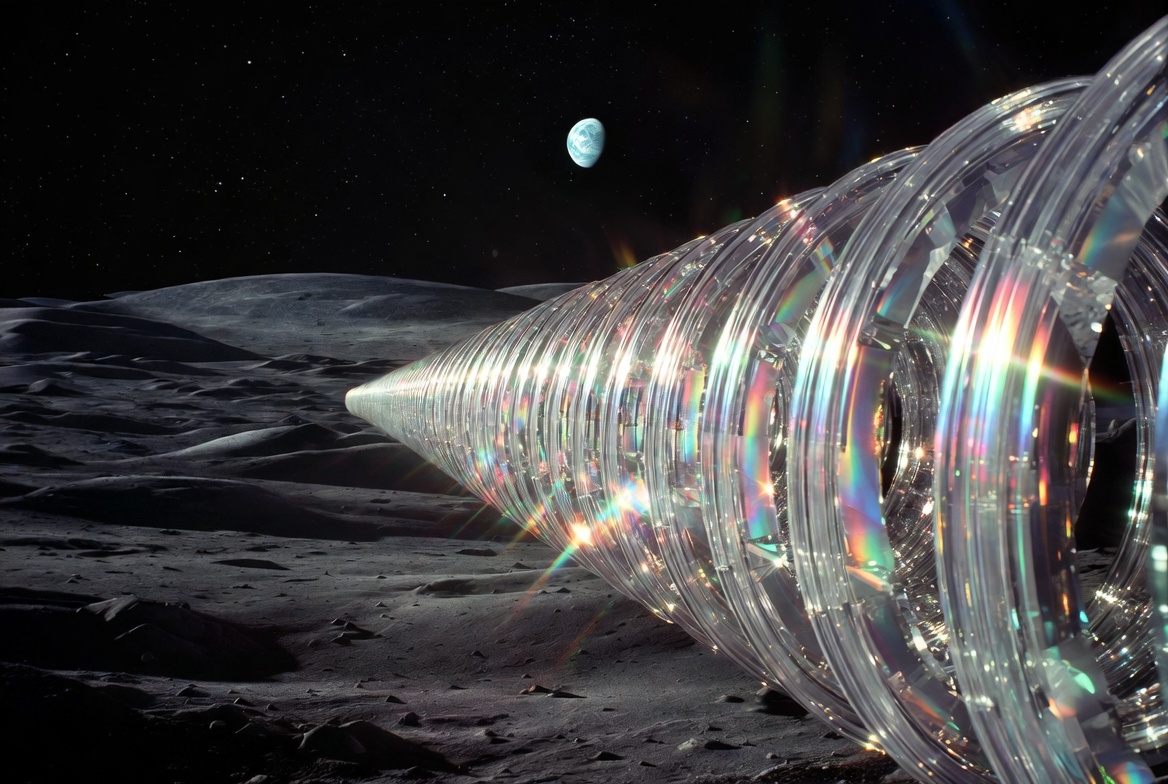
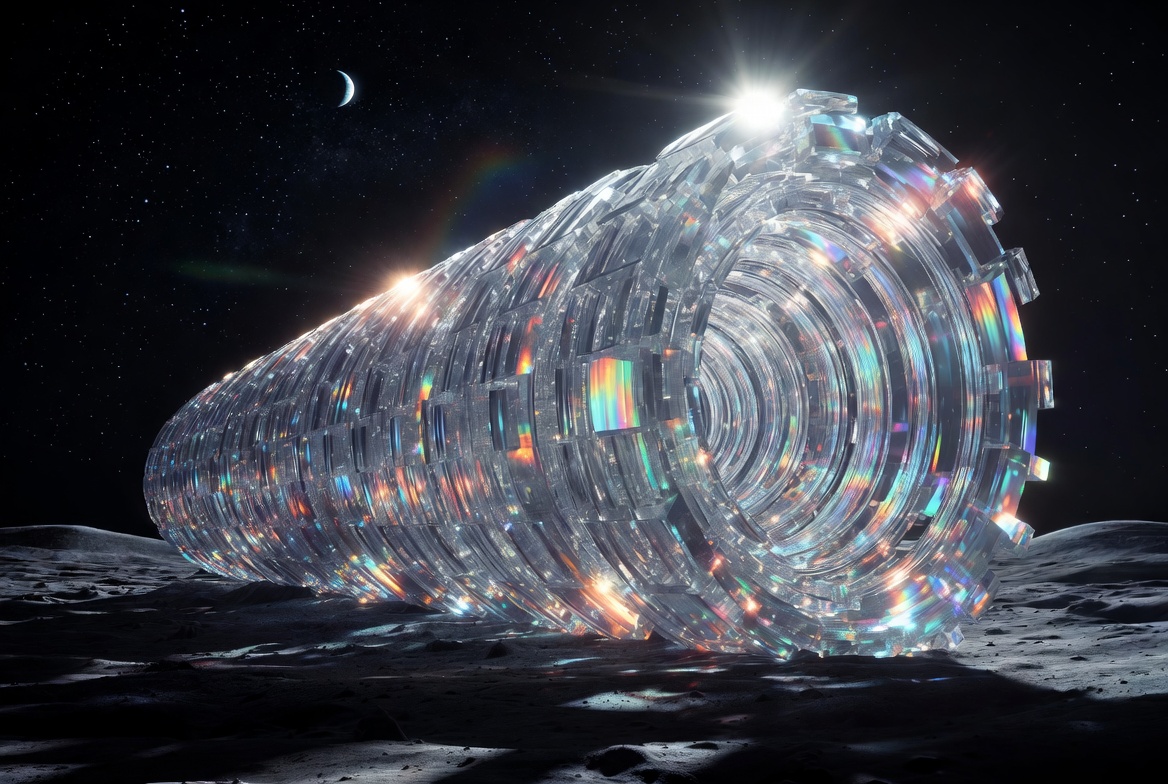
A mass driver is a linear electromagnetic accelerator. A payload sits in a carrier sled. A sequence of superconducting coils energises in precise succession, accelerating the sled along the track to launch velocity without combustion, without exhaust, without propellant of any kind.
The power comes from the grid, not the payload. Every launch draws from a capacitor bank charged by the site fusion power plant. The driver resets and charges while the next payload is loaded. Continuous, repeatable, scalable.
On Earth, mass drivers use long evacuated tubes and controlled atmospheric-transition systems to minimise drag on the exiting payload. The New Mexico installation places most of its approximately 19-kilometre active track underground in the Holloman–White Sands corridor. The European installation remains subject to corridor, geology, logistics, airspace, and downrange safety studies. On the Moon there is no atmosphere at all. The lunar driver launches directly to orbital insertion velocity with no drag losses whatsoever.